- Free Consultation 24/7: (404) 567-5515 Tap Here To Call Us




Fleeing to Elude Lawyer in Georgia: Charges, Penalties, and Defense Options


What Is Fleeing and Eluding the Police in Georgia?

Fleeing and eluding the police is a criminal offense in Georgia. It happens when a driver refuses to stop after a law enforcement officer signals them to pull over. A fleeing to elude lawyer defends drivers against that charge, which can run from a high and aggravated misdemeanor to a serious felony. Georgia uses the terms "fleeing," "eluding," and "attempting to elude" interchangeably in its statute. A charge described as eluding and evading refers to the same offense. Under Georgia law, fleeing and eluding requires the prosecution to prove three elements to convict a driver.
First, a law enforcement officer in a marked vehicle and wearing a uniform gave a visual or audible signal to stop. The signal may come by hand, voice, emergency light, or siren. Second, the driver knew that the officer was directing them to pull over. Third, the driver refused to stop.
That third element – willful intent – is critical. A driver who did not see flashing lights may not meet the legal definition of refusing to stop. A driver looking for a safe, well-lit place to pull over may also lack willful intent. Depending on the facts, the charge can range from a misdemeanor to a serious felony.
The Many Names for the Same Charge
Georgia charging paperwork and online searches use several wordings for one offense. Some drivers look for a fleeing and eluding the police attorney after an arrest. Others search for a fleeing and eluding the police lawyer, or for a fleeing to elude attorney. A citation or an accusation may read flee or elude police officer, eluding and evading, or attempting to elude. All of them point to the same Code section and the same penalties.
The wording on your paperwork does not change your exposure. What matters is whether the state can prove the signal, your knowledge of it, and your willful refusal to stop. A fleeing and eluding attorney reads the accusation closely for that reason. The label on the charge tells you very little. The facts behind it tell you almost everything.
What Counts as a Signal to Stop
The statute is specific about the signal. An officer may give it by hand, by voice, by emergency light, or by siren. The officer must be in uniform and must prominently display a badge of office. The officer's vehicle must be appropriately marked, showing it to be an official police vehicle.
Each of those requirements is a place a defense can start. A hand signal from an officer standing in traffic at night is far easier to miss than a siren right behind you. A single dashboard light on an unmarked sedan may not put a reasonable driver on notice at all. The state still has to prove the signal was given and that you understood what it meant.
How a Fleeing and Eluding Attorney Builds Your Defense
A fleeing and eluding attorney approaches these cases by attacking the prosecution's evidence from several angles. The goal is to find gaps in the state's proof on each of the three statutory elements.
The first step is getting and reviewing all available video. Dash cam footage from the patrol car shows what happened. Body cam recordings from the officer also help. Surveillance video from nearby businesses gives another angle. This footage often reveals details the officer's written report leaves out. It may show a delayed activation of lights. It may show an unclear signal. It may show a driver who was slowing down rather than fleeing.
A fleeing and eluding attorney will also subpoena 911 call recordings and dispatch logs. These records establish a timeline. They show when the officer first reported the pursuit. They show how long it lasted. They also show what the officer told dispatch. Gaps or conflicts between the dispatch log and the officer's report can weaken the state's case.
Beyond video and audio evidence, defense counsel examines whether the officer met the statute's requirements. The officer must have been in uniform displaying a badge. The officer must have been driving a marked vehicle. If either condition was missing, the charge may not hold. A fleeing and eluding attorney may also file motions to suppress evidence if the initial stop lacked reasonable suspicion. When suppression succeeds, the entire case often collapses.
In many cases, negotiation with the prosecutor is a key part of the strategy. A defense attorney familiar with local courts may negotiate a reduction to a lesser offense before any adjudication of guilt. Failing to comply with a lawful order of a law enforcement officer is one such option. This approach can avoid a felony record while resolving the case.
Misdemeanor vs. Felony Fleeing and Eluding
Georgia law draws a clear line between basic fleeing and eluding and the aggravated version. The aggravated version triggers felony prosecution. Which category your charge falls into shapes every part of your defense.
Misdemeanor Fleeing and Eluding
A basic fleeing and eluding charge is a high and aggravated misdemeanor. This applies to a first, second, or third conviction when a driver fails to stop for an officer without additional dangerous conduct. The prosecution must still prove the three core elements. No aggravating factors push the charge higher. Even at this level, the consequences are serious. A conviction creates a permanent criminal record.
When the Charge Becomes a Felony
The charge escalates to felony fleeing and eluding when an aggravating factor is present. Georgia's list is closed, and it holds six entries. The first is driving more than 20 miles an hour above the posted speed limit. The second is striking or colliding with another vehicle or a pedestrian. The third is being the proximate cause of an accident. The fourth is fleeing in traffic conditions that place the general public at risk of receiving serious injuries. The fifth is committing one of six listed traffic offenses during the flight. The sixth is leaving the state.
Those six listed offenses are worth knowing, because several of them catch people off guard. Three are the ones most drivers would expect: reckless driving, reckless stunt driving, and DUI. The other three are not. Laying drags is on the list, which means spinning or zigzagging a vehicle in a way that endangers people or property. Passing a stopped school bus while its warning signals are in operation is on the list. So is failing to stop before crossing a sidewalk when pulling out of an alley, a driveway, or a private road, a rule that also covers failing to yield to a pedestrian on that sidewalk.
A fourth or subsequent conviction within ten years is a felony even without any of those factors.
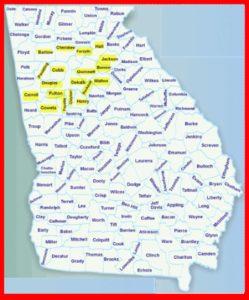
Metro Atlanta counties like Cobb and Gwinnett pursue felony charges aggressively. Prosecutors in these areas move forward when the pursuit involved any risk to public safety.
Penalties for Fleeing and Eluding in Georgia
Sentencing depends on two factors. The first is whether the conviction is a misdemeanor or a felony. The second is the number of prior offenses within a ten-year window. Georgia judges have discretion within statutory ranges. However, certain minimum sentences cannot be suspended or probated.
First Offense (High and Aggravated Misdemeanor)
Under Georgia law, a first conviction for fleeing and eluding carries a fine of not less than $1,000 and not more than $5,000. The fine cannot be suspended, stayed, or probated. Jail time ranges from not less than 30 days to up to 12 months. Any imprisonment beyond the first 30 days may be suspended at the judge's discretion.
Second Offense Within Ten Years
A second conviction within ten years triggers higher penalties. The mandatory minimum fine rises to $2,500. The mandatory minimum jail time rises to 90 days. The maximum fine remains $5,000, and the maximum jail term is 12 months. Jail time beyond 90 days may be suspended. Nolo contendere pleas within the ten-year window count as prior convictions.
Third Offense Within Ten Years
A third conviction within ten years carries a mandatory minimum fine of $4,000. The mandatory minimum jail time is 180 days. The maximum remains $5,000 in fines and 12 months in jail. Time beyond 180 days may be suspended.
Fourth or Subsequent Offense (Felony)
A fourth or subsequent conviction within ten years is a felony. The fine ranges from $5,000 to $10,000. Imprisonment ranges from 12 months to ten years.
Felony Penalties When an Aggravating Factor Applies
When an aggravating factor is present, the offense is a felony regardless of prior history. The fine ranges from $5,000 to $10,000. Imprisonment ranges from 12 months to ten years. Under Georgia law, sentences for felony fleeing and eluding convictions cannot be suspended, probated, deferred, or withheld. The charge cannot be reduced, merged, or served concurrently with other offenses.
Fines You Cannot Get Suspended, and Paying in Installments
The fine on a first, second, or third conviction is not subject to suspension, stay, or probation. The judge has to impose it. A driver who cannot pay is not simply excused from it.
The statute does hold one release valve. If paying the fine would impose an economic hardship on the defendant, the judge may, at his or her sole discretion, order payment in installments. That order can be enforced through a contempt proceeding. It can also be enforced by revoking any probation the sentence otherwise allows.
One more point matters in city court. Notwithstanding the limits set in any municipal charter, a municipal court may impose the punishments the statute provides for the first three conviction levels. A municipal court may do the same on a conviction under a local ordinance that adopts those provisions. A driver who assumes a city court cannot reach a $4,000 fine and 180 days in jail is mistaken.
Collateral Consequences
Beyond the courtroom, a conviction affects daily life. Georgia law requires the Department of Driver Services to suspend the license of any driver convicted of using a vehicle to flee or elude an officer. Three or more such convictions within five years bring habitual violator status and a five-year license revocation. Insurance premiums may increase sharply. A felony record can disqualify a person from certain jobs, professional licenses, and housing. For non-citizens, a felony conviction could trigger deportation proceedings or bar future immigration benefits.
These penalties underscore why consulting a criminal defense attorney early matters so much. The difference between a misdemeanor plea and a felony conviction can alter the course of a person's life.

What Happens After a Fleeing and Eluding Arrest in Georgia
Most drivers meet the court system in the same order. Knowing that order helps you see where a defense can change the result.
Booking and bond. The arrest is followed by booking at the county jail. A judge or magistrate then sets bond. A high and aggravated misdemeanor usually draws a bond a defendant can post fairly quickly. A felony charge often draws a higher bond and stricter release terms.
Charging and first appearance. A misdemeanor case moves forward on an accusation drawn by the prosecutor. A felony case usually begins in magistrate court, where a preliminary hearing tests whether probable cause exists, and moves to superior court once a grand jury returns an indictment. Counties run these steps on very different calendars, so ask your lawyer what the local practice is.
Arraignment. At arraignment you enter a plea and the discovery clock starts. This is where a fleeing to elude lawyer files the demands that matter most: the state's video, the dispatch recordings, and the officer's training and certification file.
Motions. Suppression motions and preservation motions come next. A motion to suppress attacks the reason for the stop. A preservation letter keeps the video from aging off the agency's server before anyone watches it.
Negotiation or trial. Most cases resolve by agreement once the defense has the full file. Some go to trial. Either way, the work done in the first 60 days usually decides which of those two outcomes is even available.
Fleeing and Eluding or Obstruction: Which Charge Fits?
Officers sometimes write both charges out of one encounter, and the two are not the same thing.
Fleeing and eluding is about the vehicle. The state must show a signal to stop, your knowledge of that signal, and your willful refusal to bring the vehicle to a stop. The offense sits in the traffic code, and its penalties climb with each prior conviction inside a ten-year window.
Obstruction of a law enforcement officer is about hindering the officer. The misdemeanor version reaches a person who knowingly and willfully hinders an officer in the lawful discharge of official duties. The felony version applies when the person offers or does violence to the officer. Running from a stopped car on foot, refusing to show your hands, or struggling during handcuffing is the kind of conduct prosecutors charge this way.
That distinction has real value. A driver who stopped the car and then argued at the window has an obstruction problem, not a fleeing problem. A driver who kept rolling for half a mile and then pulled over has the opposite. When the state files both, a defense attorney looks hard at whether one piece of conduct is being counted twice.
How to Beat a Fleeing and Eluding Charge: Common Defenses
The answer to beating a fleeing and eluding charge depends entirely on the facts of your case. No outcome is guaranteed. Every defense strategy must be built around the evidence. Several defenses come up again and again in Georgia fleeing and eluding cases.
Lack of Knowledge or Willful Intent
The prosecution must prove that the driver knew an officer was signaling them to stop. The prosecution must also prove the driver willfully refused. If that proof is weak, the charge may fail.
Drivers charged with eluding often did not perceive the officer's signal. Road noise, heavy rain, and loud music can create real ambiguity. An officer following at a distance with a delayed activation of lights can also create ambiguity. Officers sometimes activate lights on unmarked or semi-marked vehicles. That makes it harder for a driver to recognize a lawful traffic stop.
A driver searching for a safe place to pull over acts differently from one who is fleeing. Looking for a well-lit parking lot or a wider shoulder does not show willful refusal. Georgia courts recognize that briefly delaying a stop for safety reasons differs from eluding a police officer. Dash cam footage may show the driver slowing down. It may show the driver using a turn signal. It may show the driver moving toward the road's edge. Those are all signs that do not fit flight.
The willfulness element requires more than a delayed stop. The prosecution must show the driver made a conscious choice to refuse the officer's signal. Without clear evidence of that choice, the defense has strong ground to challenge the charge.
Unmarked Vehicle or Non-Uniformed Officer
The statute requires the officer to be in a marked vehicle. The statute requires the officer to be wearing a uniform. The uniform must prominently display the officer's badge of office. If either condition was not met, the charge may not hold. An officer in plain clothes driving an unmarked sedan may not satisfy the statute. That holds true even if they turned on a dashboard light.
Challenging the Evidence
Dash cam footage, body cam recordings, and location data often tell a different story than the officer's report. The video may show the driver slowing down or using a turn signal. It may show the driver pulling into a parking lot. Those actions do not fit someone trying to flee.
On the other hand, if dash cam footage has been lost or overwritten, the defense can argue the state destroyed helpful evidence. Speed data used to support a claim of "high speed" fleeing may also be challenged. Officer training records and calibration records can reveal flaws in how the speed was measured.

Unlawful Stop or Lack of Reasonable Suspicion
The prosecution's entire case rests on the officer having a lawful reason to signal a stop. If the initial reasonable suspicion was weak, a motion to suppress can dismantle the charge. Common problems include a mistaken license plate reader hit. A vague claim of "suspicious driving" with no supporting details is another. A pretextual stop that lacked articulable facts also supports suppression.
Georgia courts evaluate reasonable suspicion under the same framework used for Terry stops. The officer must point to specific, articulable facts that justified the signal to stop. If those facts do not hold up, any evidence gathered during the pursuit may be suppressed. When suppression succeeds, the prosecution typically has no case left to bring. An experienced fleeing and eluding attorney will examine every detail of the officer's stated basis for the stop.
What to Do If You Are Charged With Fleeing and Eluding
The steps you take right after an arrest can make or break your defense. Time-sensitive evidence disappears quickly. Acting fast is essential.
Do not discuss the case with police. You have the right to remain silent. Anything you say can be used against you. Avoid explanations like "I did not see you" or "I was scared." Politely invoke your right to an attorney.
Preserve evidence immediately. Georgia law requires agencies to keep dash cam and body cam video for 180 days, and for 30 months when it is part of a criminal investigation or shows an arrest. After that, the footage may be erased. Your attorney can file a preservation request. This keeps the footage from being destroyed. That evidence often helps the defense more than the prosecution.
Write down everything you remember. Note the route you drove, the traffic, the weather, and the visibility. Note any reason you may have delayed stopping. Record whether the officer's vehicle was clearly marked. Note whether sirens were audible.
Contact a defense attorney right away. Georgia arraignment deadlines move quickly. Early help gives your lawyer time to investigate and preserve evidence. Your lawyer can also open talks with prosecutors before formal charges harden.
Related Charges Often Filed With Fleeing and Eluding
Prosecutors in Georgia rarely file fleeing and eluding as a standalone charge. They typically stack other offenses based on what happened before, during, and after the pursuit. Knowing those related charges helps a defendant see the full picture.
Reckless driving is one of the most common companion charges. Any driving during a pursuit that shows reckless disregard for the safety of persons or property supports this misdemeanor charge. A conviction carries up to a $1,000 fine and up to 12 months in jail.
Obstruction of a law enforcement officer is another frequent addition. The misdemeanor version applies when a person knowingly and willfully hinders an officer in the lawful discharge of duties. If the person offers or does violence to the officer, the charge becomes a felony. A felony conviction carries one to five years on a first offense.
Driving Under the Influence (DUI) charges often accompany fleeing and eluding when the pursuit began as a suspected impaired driving stop. A fleeing and eluding case that started as a DUI stop opens additional defense angles. The reason the officer began the stop becomes a separate battleground.
Driving on a suspended license may apply if the driver's license was already revoked at the time of the pursuit. Hit-and-run charges may be added if the driver struck another vehicle or property during the flight.
When multiple charges are stacked, the defense strategy must address the whole package. An attorney familiar with Georgia courts can sometimes negotiate a global resolution. That may reduce or dismiss companion charges as part of a plea agreement. Each added charge also creates another suppression opportunity if the initial stop was unlawful.

Why Hire a Fleeing and Eluding Lawyer Familiar With Georgia Courts
A fleeing and eluding lawyer who practices regularly in Georgia courts brings specific advantages to the defense. These cases involve layered evidence. Dash cam footage, body cam recordings, dispatch logs, speed data, and officer certifications all matter. An attorney who handles these cases knows how to get, review, and challenge each piece.
Familiarity with local prosecutors and judges matters. Courts in Fulton, DeKalb, Cobb, Gwinnett, and Clayton counties each handle these charges differently. Some jurisdictions are more open to negotiating felony reductions. Others want a stronger evidentiary challenge before they consider options. Our firm defends criminal charges throughout metro Atlanta and understands how those local differences shape case strategy.
Look for an attorney with motion practice experience. Suppression hearings are often the turning point in fleeing and eluding cases. When the initial stop was unlawful, a strong motion can end the prosecution. When the officer was not in uniform or the vehicle was not marked, a strong motion can end the prosecution. A fleeing and eluding attorney who litigates these motions regularly knows what Georgia judges expect.
No outcome is guaranteed. Every case depends on its own facts. Choosing a lawyer who knows the local courts and the technical defenses available gives you the strongest position.
Speak With a Georgia Fleeing and Eluding Defense Attorney
If you or someone you love faces a fleeing and eluding charge in Georgia, time is not on your side. Dash cam and body cam footage can be erased once the retention period Georgia law sets for it runs out. Early attorney involvement lets a preservation letter go out to the law enforcement agency before that footage disappears. Court deadlines will not wait.
William C. Head, PC offers a free, confidential consultation for fleeing and eluding cases. We will review the facts of your situation, explain your legal options, and outline a defense strategy built for your case. Outcomes depend on the specific facts and circumstances – no results are guaranteed.
Call 404-567-5515. Early action gives you the strongest position.

Frequently Asked Questions About Fleeing and Eluding in Georgia
Is Fleeing and Eluding a Felony in Georgia?
Fleeing and eluding can be either a high and aggravated misdemeanor or a felony in Georgia. The charge becomes a felony when an aggravating factor is present. Those factors include driving more than 20 miles an hour above the speed limit, striking a vehicle or pedestrian, causing an accident, or leaving the state. A fourth or subsequent conviction within ten years is also a felony.
What Is the Penalty for Fleeing and Eluding the Police in Georgia?
A high and aggravated misdemeanor conviction may result in up to 12 months in jail and fines up to $5,000. A felony conviction carries 12 months to ten years in prison, fines of $5,000 to $10,000, and license suspension. Other consequences may include probation, insurance increases, and trouble finding work.
Do I Need a Lawyer for a Misdemeanor Fleeing and Eluding Charge?
Yes. A basic charge is a high and aggravated misdemeanor, and a first conviction carries a fine of at least $1,000 and at least 30 days in jail. Neither the fine nor that first 30 days can be suspended. A conviction also triggers a license suspension and counts against you for ten years if you are charged again. A fleeing and eluding the police lawyer can look for the gap in the state's proof before any of that attaches.
Can I Be Charged if I Pulled Over a Few Blocks Later?
You can be charged, but a delayed stop is not the same thing as fleeing. The state has to prove you willfully refused to stop. Slowing down, signaling, and moving toward the shoulder all point the other way. Dash cam video of those few blocks is often the most valuable evidence a fleeing to elude attorney can put in front of a prosecutor.
Does a Fleeing and Eluding Charge Require a High-Speed Chase?
No. The statute sets no speed, no distance, and no minimum duration. A short refusal to stop can support the charge. Speed matters in one specific way: driving more than 20 miles an hour above the posted limit while fleeing is one of the aggravating factors that makes the offense a felony.
Can a Felony Fleeing and Eluding Charge Be Reduced to a Misdemeanor?
In some cases, a felony fleeing and eluding charge can be reduced to a misdemeanor before guilt is adjudicated. Georgia law bars reducing, merging, or running the felony charge concurrently once guilt is adjudicated or sentence imposed. An experienced defense attorney may negotiate a reduction depending on the facts. The speed involved, whether anyone was injured, and the driver's criminal history all matter. Prosecutors in some Georgia counties are more open to reductions than others. Local court familiarity matters.
Will I Lose My Driver's License if Convicted of Fleeing and Eluding in Georgia?
A conviction requires the Georgia Department of Driver Services to suspend the driver's license. That suspension is mandatory on conviction, whether the charge was a misdemeanor or a felony. Three or more such convictions within five years trigger habitual violator status, resulting in a five-year revocation.
How Long Does a Fleeing and Eluding Conviction Stay on My Record?
In Georgia, criminal convictions generally stay on your record permanently unless you qualify for record restriction (formerly expungement). Felony convictions are especially hard to restrict. Ask an attorney about your own eligibility.
What Is the Difference Between Eluding and Evading a Police Officer in Georgia?
Georgia law does not distinguish between "eluding" and "evading" a police officer. The statute uses the terms "flee" and "attempt to elude" to describe the same offense. Whether a charge is described as eluding, evading, or fleeing, it falls under the same statute and carries the same penalties. The terms are used interchangeably in Georgia courts.
Contact Us