William C. Head, P.C.
Atlanta DUI Law Firm





A board certified criminal defense attorney has passed review by an outside certifying group. That group must be accredited by the American Bar Association. Certification rests on trial work, peer review, a written exam, and ongoing legal training.
That definition draws the line most readers want. Every licensed lawyer in Georgia may take a criminal case. Only a small share hold board certification.
The difference comes down to what each credential measures. A state bar license shows the least skill needed to practice law. Board certification shows proven work in one field.
Certification is also voluntary. No court requires it. No rule stops a lawyer without it from trying a felony case. Private groups grant the credential. Judges do not, and neither does the State Bar of Georgia.
The State Bar licenses and disciplines Georgia lawyers. But the bar does not run a specialty program for criminal law. So a Georgia firm that advertises certification earned it from a national group outside the state bar.
Certification is a real signal of tried cases and tested knowledge. The credential is not a license upgrade. It also does not predict how a case will turn out.
No single national board covers criminal law. Georgia has no state bar specialty program for criminal defense either. Certification comes from private groups instead. The American Bar Association accredits those groups to certify lawyers in set fields.
Accreditation matters. It sets standards the certifying group must meet. An accredited group has to test applicants. It must check their trial records. It must also require renewal on a schedule.
Two questions sort out any advertised credential. Which group issued it? Is that group accredited by the American Bar Association?
Those questions filter out a lot of noise. Legal marketing is full of "certifications" from groups with no accreditation. Pay-to-join award directories add more clutter. Some seals look official but reflect a membership fee, not a reviewed record. A real certification names the group that issued it. Readers can check it with that group directly.
Two groups matter most to a Georgia criminal and DUI practice.
The National Board of Trial Advocacy certifies lawyers in criminal trial law. It is part of the National Board of Legal Specialty Certification. The American Bar Association accredits its program.
Requirements generally include several years in practice. Applicants must also show a number of criminal trials taken to verdict. They submit references from judges and peers who have watched them try cases.
Applicants then sit for a full-day written exam. It covers criminal procedure, evidence, and trial practice. Certification lasts for a set term. Lawyers must reapply from time to time. Exact thresholds vary and change over time.
The National College for DUI Defense board certifies lawyers in DUI defense. It is the only group with American Bar Association accreditation to do so.
A separate credential exists for a reason. DUI cases mix criminal procedure with testing science. Defending one may mean challenging a breath testing machine. It may mean attacking blood collection steps. It may also mean testing the standardized field sobriety evaluations officers give at roadside.
The number of DUI board certified attorneys nationwide stays very small. Requirements generally include proven DUI trial work, peer review, and a hard exam.
For a Georgia driver charged with driving under the influence, DUI credentials may matter more than general criminal trial certification. A board certified criminal defense lawyer who holds both brings two skill sets to the file.
The path is long by design. Requirements vary by certifying group. Still, the sequence looks much the same.
Years in practice. Most programs require a set period of active practice. Five years or more is common. Much of that time must be spent on criminal defense.
A documented trial record. Applicants list criminal jury trials taken to verdict. They also list contested hearings, such as motions to suppress. Plea deals do not count toward the trial requirement.
References. Judges and opposing counsel who have seen the applicant try cases send written reviews. Peer review is the part applicants cannot control. That is a large reason the credential carries weight.
A written examination. The exam usually runs a full day. It covers criminal law, evidence, procedure, and trial skills. Applicants can fail it, and some do.
Specialty continuing legal education. Certifying groups require set training hours in the certified field. General credit hours do not count.
Renewal is the piece most readers overlook. Certification expires. Lawyers must reapply on a set cycle, often every five years. They must show recent trial work, current training, and fresh references.
That cycle means the credential reflects current work. The credential is not a one-time prize. Requirements do change. Readers should check the certifying group's published standards before drawing conclusions.
Georgia limits how lawyers describe their fields of practice. Rule of Professional Conduct 7.4 long governed specialization claims. Georgia rebuilt its advertising rules on the American Bar Association model effective March 1, 2026. Those provisions now sit in Rule 7.2.
The core principle did not change. A Georgia lawyer may say they concentrate or focus in a field. That claim must rest on real experience, training, or education. A claim of formal certification carries an added duty.
A lawyer who advertises board certification should name the certifying group in the ad. That group must be approved by the State Bar of Georgia or accredited by the American Bar Association. A claim that hides the issuing body does not meet the rule.
Two practical points follow for anyone comparing lawyers.
First, look for the group's name next to the certification claim. "Board certified" standing alone tells you nothing. "Board certified in DUI defense by the National College for DUI Defense" tells you exactly what to check.
Second, readers should verify the claim themselves. Certifying groups publish lists of currently certified lawyers. A directory search or a phone call confirms whether the credential is active.
These rules protect consumers. They also give you a simple test to apply on any law firm website.
Certification brings three practical advantages when you face charges in Georgia.
Trial readiness comes first. Certification requires cases tried to verdict, not resolved by plea. Our firm defends criminal and DUI cases in Georgia state, superior, and municipal courts. In our experience, prosecutors weigh a file differently when defense counsel has a record of jury trials. That may shift leverage in talks. It can matter even in cases that never reach trial.
Depth in the subject comes second. DUI defense rewards technical knowledge of breath testing machines. Blood collection and storage matter too. So do the field sobriety evaluations officers give at roadside. Suppression practice turns on the same detail. These cases often hinge on the stop, the testing, and the paperwork. Each one must hold up under review.
Outside review matters just as much. Peer and judicial review is harder to fake than a marketing claim. Someone outside the firm looked at the lawyer's work.
Weigh this honestly. Certification is one signal among several. The credential does not guarantee any outcome. Results depend on the facts of each case. Many skilled lawyers without it try criminal cases well. One of them may be the right fit for your situation.
Other factors count alongside the credential. Local court experience matters. Practice in Fulton, DeKalb, Cobb, and Gwinnett County courts differs from a small municipal court. Clients should also ask how the lawyer communicates, who handles the file day to day, and how fees work.

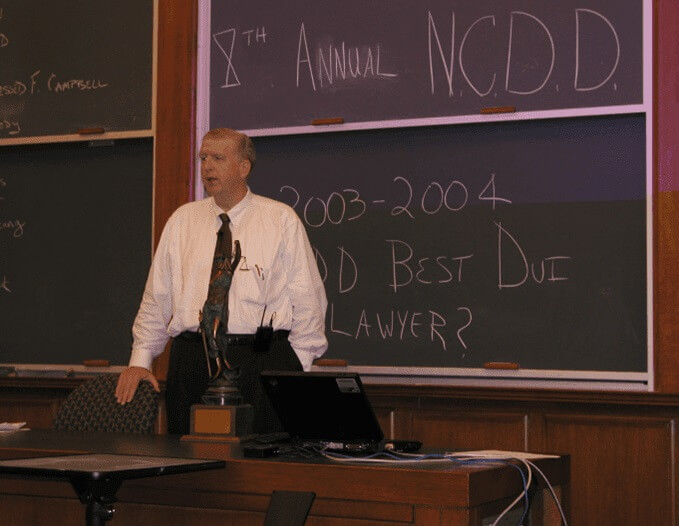
William C. Head, PC has focused on Atlanta criminal defense and DUI trial work for decades. William C. Head has been Board Certified in DUI Defense by the National College for DUI Defense since 2000, and he helped establish that organization in 1995. Our practice covers DUI, drug charges, vehicular homicide, traffic offenses, and general criminal defense in metro Atlanta courts.
Consultations are free and confidential. A first call covers a few basics. We review the charge on your citation or accusation and your next court date. We also cover the stop, the arrest, and any chemical testing that took place.
License deadlines get attention early. Georgia gives drivers a short window after a DUI arrest. That window covers the administrative suspension of driving privileges. Missing it can cost you driving rights before a judge ever hears the criminal case. Clients should bring arrest paperwork to the first conversation.
Certifications are a fair subject for questions. Clients should ask which groups issued them. Checking directly with those groups is wise. The same test applies to every firm you speak with.
No lawyer can promise a result. Every case is different, and results depend on the specific facts and the law that applies. We offer a straight read on your case and a clear account of your options.

A board certified lawyer is not automatically better. Certification shows proven trial work, peer review, and a passed exam. Those are useful signals. Still, many skilled criminal defense lawyers never pursue it. Certification does not guarantee any outcome. Results depend on the facts of your case. Treat it as one factor. Local court experience, communication, and fees count too.
Georgia has no state bar board certification for criminal law. The State Bar of Georgia licenses and disciplines lawyers. But the bar does not run a specialty program for criminal law. Georgia lawyers with criminal certification earned it from a national group. That group must be accredited by the American Bar Association. Georgia's advertising rules require the ad to name it.
The share of board certified criminal defense lawyers is small. Only a fraction of licensed lawyers pursue certification. The number certified in DUI defense is smaller still. Exact counts shift as lawyers certify, renew, or let credentials lapse. The certifying groups publish current figures and searchable lists. Those lists are the reliable place to look.
You can verify a certification in two steps. Ask which group issued it. Then search that group's public list of certified lawyers, or call the group directly. Confirm the credential is current. Certification expires and must be renewed. If a website says "board certified" without naming an issuer, ask for the name before relying on the claim.
Yes, the two credentials differ. Criminal trial certification covers criminal cases broadly. That includes felony jury trials across offense types. DUI certification focuses on impaired driving cases. Those cases involve breath and blood testing science, field sobriety evaluation, and license hearings. A lawyer may hold one, both, or neither. Which one matters more depends on the charge you face.