William C. Head, P.C.
Atlanta DUI Law Firm



By: William C. Head, Founder of Mastering Scientific Evidence in DUI-DWI Cases, Criminal Defense Lawyer Explains the Romberg Test
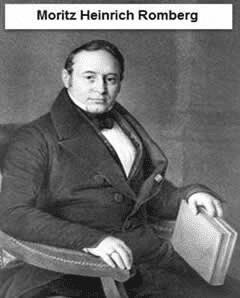
The Romberg test is a neurological balance exam developed by Dr. Moritz Heinrich Romberg in the 19th century. It is used in medical diagnostics to assess proprioception, the body’s ability to sense movement and position.
However, in DUI investigations, Georgia police administer a Modified Romberg Test—a non-standardized field sobriety test that significantly differs from the original medical exam. Unlike the real Romberg test, which evaluates neurological function, the police version is used to detect alleged impairment—but its reliability is highly questionable.
Understanding these key differences is critical, especially if you’ve been arrested for DUI in Georgia. While the medical Romberg test is a trusted neurological evaluation, the Modified Romberg Test is a subjective field sobriety test with no scientific credibility.
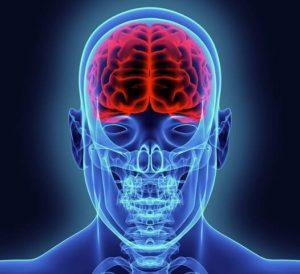
While the medical Romberg test is a well-established exam used to diagnose balance disorders, the Modified Romberg is a subjective, non-scientific field sobriety test used by police during DUI stops. Despite their similar names, these test serve completely different purposes.
To fully understand why the police version of the Romberg Test is unreliable, let’s first look at how the real Romberg test is conducted in a medical setting—and why law enforcement misapplies it.
The Romberg test helps doctors evaluate neurological function, specifically spinal cord integrity and proprioception. Dr. Romberg originally designed this test to detect spinal cord diseases that affect balance and coordination. There are two ‘phases’ to the real Romberg:
The patient stands with feet together, arms at their sides, and eyes open. A doctor observes their ability to maintain balance for about 60 seconds. If stable, they proceed to the next phase.
If the patient shows impaired balance when they close their eyes, this is known as a positive Romberg test, indicating possible neurological dysfunction in the spinal cord or brainstem. A negative Romberg test means the person maintains balance with and without visual input, suggesting a healthy nervous system.
The patient closes their eyes and repeats the same test. A medical professional monitors them closely, as some individuals may lose balance or fall.
However, false positives can occur due to recent falls, injuries, or anxiety. This is why the Romberg test is part of a broader neurological exam, not a standalone diagnostic tool.
The real Romberg test is a trusted medical exam used by neurologists to diagnose balance disorders linked to spinal cord or nerve damage. In contrast, the so-called Modified Romberg Test used by police is nothing more than a subjective, non-scientific sobriety test designed to create the illusion of impairment.
Unlike the medical test, which follows a clear, clinical procedure, the police version forces drivers into an unnatural stance that can cause even sober individuals to fail—making it an unreliable and misleading tool in DUI investigations.
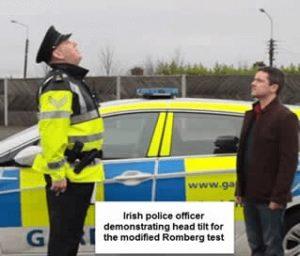
Unlike the medical Romberg test, which measures neurological function, the Modified Romberg Test is a non-standardized DUI field sobriety test that lacks scientific validity. Law enforcement officers use this test to evaluate a driver’s ability to estimate time and maintain balance, yet it does not accurately measure impairment. The Modified Romberg Test requires the driver to:
Officers then subjectively assess balance, swaying, use of arms for stabilization, and time estimation errors.
However, this test fails to account for medical conditions affecting balance, stress, or fatigue that can cause swaying, and environmental factors such as uneven pavement or poor lighting.
Since the Modified Romberg Test is not part of the Standardized Field Sobriety Test (SFST) protocol, its results are highly unreliable in DUI cases. The Georgia Supreme Court has also questioned the admissibility of this test in Mitchell v. State (2017), ruling that the State must establish a scientific foundation before using Romberg test results in DUI prosecutions.

Despite being used in thousands of DUI cases, the Modified Romberg Test has no scientific basis for proving intoxication. Unlike the medical Romberg test, which is a legitimate neurological evaluation, the police version lacks clinical credibility and has been challenged in court.
If you’ve been arrested based on this test, your DUI charge may be based on flawed evidence, giving you strong legal grounds to fight back.
Modified Romberg Test Demonstration
Again, do not take this test. It only adds to the prosecutor’s evidence against you in your DUI drugs case.
Many field “sobriety test” procedures aren’t accurate indicators of impaired driving, drug effects, and observable intoxication even though they are modified versions used by neurologists to diagnose brain disease.
So where did the Romberg Test actually come from? To understand why police misuse this test in DUI stops, it’s important to look at its original medical purpose, and why it was never meant to be used as a sobriety test.
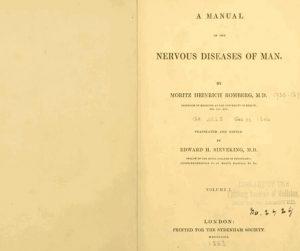
The Romberg test was developed in the 19th century by Dr. Moritz Heinrich Romberg as a neurological diagnostic tool. His work, influenced by Austrian physician Johann Peter Frank, focused on spinal cord diseases that affected balance and proprioception.
Romberg’s test helped diagnose sensory ataxia, a condition linked to spinal cord injuries, infections like syphilis, and neurological disorders such as multiple sclerosis.
However, police misuse this medical test, transforming it into an unreliable sobriety assessment—something it was never designed to do.
The Modified Romberg Test isn’t the only field sobriety test police use against drivers in DUI cases. In fact, officers regularly administer three additional tests, all of which are just as unreliable and completely voluntary. Here’s what you need to know about these tests and why you should think twice before agreeing to take them.
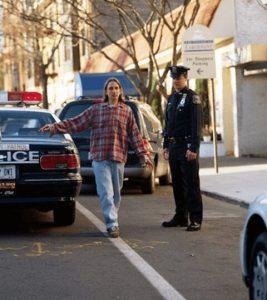
When stopped for suspected drunk driving, in addition to the Modified Romberg Test, officers may ask you to perform three Standardized Field Sobriety Tests (SFSTs): The Horizontal Gaze Nystagmus (HGN) Test, the Walk-and-Turn test, and the One-Leg-Stand (OLS) Test.
While officers may imply that these tests are mandatory, they are 100% voluntary under Georgia law. There is no legal penalty for refusing them. Taking this DUI Romberg Test (or any field sobriety test) can only harm your chances of defeating the drunk driving charge, especially if your case goes to trial and your poor performance is shown to a jury.
The only information you are required to provide during a DUI stop is your name, driver’s license, and proof of insurance. Beyond that, you have the right to politely decline all field sobriety tests and request an attorney immediately.
Many people have seen or heard of individuals being asked to recite the alphabet backwards during a DUI arrest. But, this is inaccurate: while the detainee does have to say the alphabet, the person must recite the entire alphabet OR a section of the officer’s choosing (i.e. f to v). Just like the modified Romberg, this is not a standardized field sobriety test.

If you were arrested for DUI in Georgia based on field sobriety test results, don’t assume the case against you is airtight. The Modified Romberg Test, Walk-and-Turn Test, and One-Leg Stand Test are all flawed, subjective methods that do not provide scientific proof of impairment.
You need an experienced Georgia DUI attorney who understands how to challenge unreliable evidence, question officer procedures, and fight to get your charges reduced or dismissed.
Our firm has over 90 years of combined experience successfully defending drivers just like you. Call our DUI defense firm today at 404-567-5515 for a free consultation and start building your defense now.
Check Out these Highly-Related Topics About DUI:
GA DDS : Protecting against Driver’s License Suspension under Implied Consent
Constitutionality of DUI Checkpoints in Georgia
BAC Chart for Alcohol Level by Weight and Number of Drinks