William C. Head, P.C.
Atlanta DUI Law Firm




By: William C. Head, Drunk Driving Book author, Atlanta DUI lawyer, and Board-Certified in DUI Defense (NCDD). Most people arrested for driving under the influence think that they have no chance of "winning" their DUI in Georgia. After arrest, many drivers face handcuffs, loss of their license, jail time, bond, impound fees, and humiliation. Most then start their search for help with a defeatist attitude. Like a cancer diagnosis, never give up. Never plead guilty when an experienced DUI lawyer may be able to save you from conviction. Many accused drivers in Georgia cannot move past arrest night. They do not search for DUI attorneys who may have solutions.

No single factor or lawyer trait holds the secret to beating a DUI in Georgia. Your attorney's skill in Georgia DUI law is the most important variable. An experienced lawyer can lead to acquittal, dismissal, or a reduction to reckless driving. First, let us look at the typical evidence needed for a DUI less safe case. We will also cover cases for exceeding the legal alcohol limit, or DUI per se.
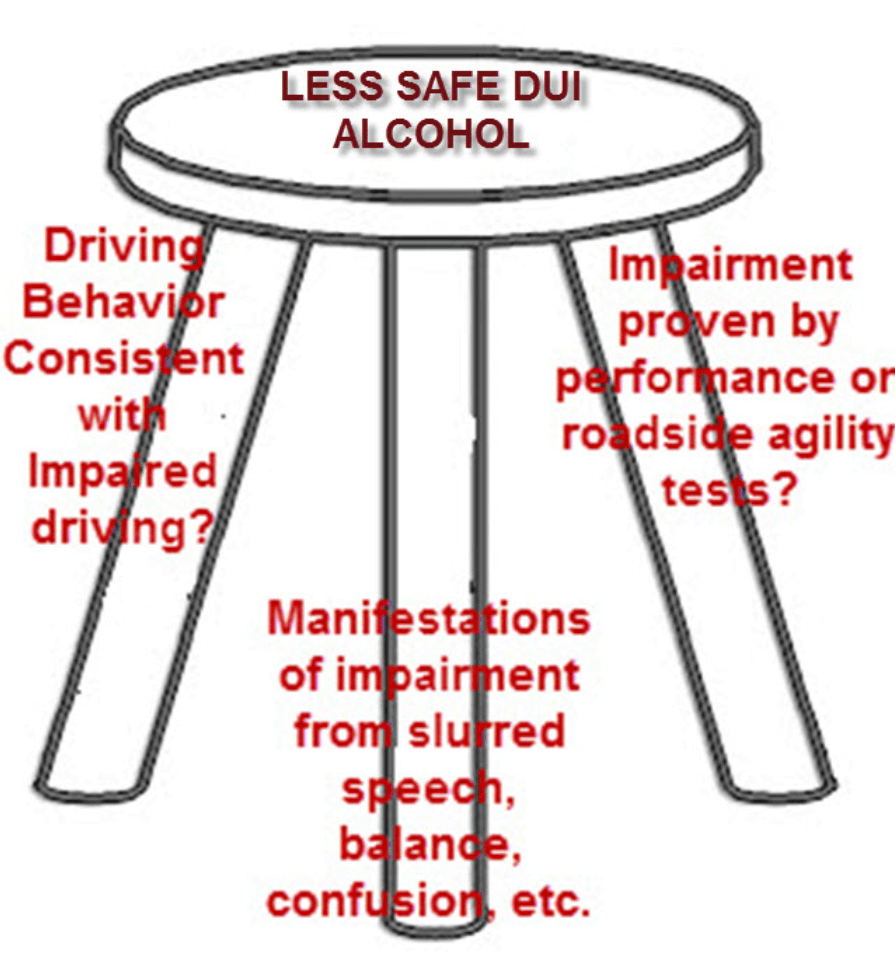
Three categories of law enforcement testimony will make or break the prosecution's case for less safe DUI in Georgia under the driving under the influence statute, subsection (a)(1). If you do not give up any unnecessary evidence, you can remove one or two legs of this "three-legged" stool: See our related guide: Motion to Suppress DUI Evidence in Georgia: How It Works.
What was the driving conduct prior to the traffic stop?
Car accidents often show bad or negligent driving. However, officers rarely witness the wreck. In most Georgia cases, a "moving violation" like failure to maintain lane, failure to yield, speeding, or following too close will prompt the stop. Most Georgia arrests now have video or audio of the stop and the field sobriety tests. Video evidence and the police report are key items a drunk driving attorney reviews to find errors. At DUI checkpoints, no unsafe driving is typically observed. This missing factor helps the accused driver.
How did the driver look, sound, and smell?
Police officers note signs of impairment. These signs can result from pure panic or fear. The smell of alcohol or other substances will prompt questions like "When was your last drink?" or "Where is the weed?" Officers use verbal judo techniques. They catch the nervous driver off guard at a moment that causes panic. The driver then starts answering. The more the person talks, the more likely arrest will occur. Talking produces evidence like slurred speech, confusion, or contradictions – real or imagined by the officer.
How did the suspected impaired driver perform on field sobriety tests?
All roadside testing before arrest is voluntary and optional. Never attempt these tests. No penalty exists for declining these subjectively-graded evaluations. Politely decline. If asked why you will not cooperate, ask to call a lawyer. Keep asking after that. Declining voluntary tests will help you beat a DUI if you hire an experienced lawyer who will fight your case.
What you say and do at the roadside shapes the case that follows. Our guide explains what to do if pulled over for DUI in Georgia, including the 30-day license deadline. At this point, the cuffs will be put on your wrists. Usually, the implied consent notice for Georgia will be read to you.
Recent cases from the Georgia Supreme Court and Georgia Court of Appeals (decided in late 2017) have changed practice. Some officers now avoid reading implied consent. Instead, they try to get you to volunteer for testing. Never volunteer to give blood, breath, or urine. If the officer reads the Georgia implied consent law notice, refusal to take the state test can cause loss of driving privileges for one full year. However, you may be able to change your mind and agree to the test at the police station or jail. Keep that option in mind. If you do submit to try to save driving privileges, always request your own independent test of your blood. Request it after taking the state tests. You get to select where to get that independent test, from qualified personnel of your own choosing. The test is at your own expense, so you must be able to pay by credit, debit, HSA card, or cash. How far an officer must go to accommodate that request – including letting you call someone to bring cash – comes from Georgia court decisions, not from the implied consent statute.
If asked for a breath alcohol test, note that Georgia's implied consent notice warns only that refusal of blood or urine testing may be offered into evidence against you at trial. Georgia appellate cases, Olevik and Council, shape how a refusal may be used in the criminal case. For those who do submit to post-arrest breath tests, the evidence obtained will be used in the per se DUI case.
Many people search for what to do when you get a DWI. Georgia does not use the term "DWI." Under Georgia law, the state charges this offense as driving under the influence – DUI. The steps you take in the hours and days after arrest may shape your entire case. Here is what matters most.
Write down everything while it is fresh. As soon as you can, record every detail you remember. Note the reason the officer gave for the stop, every field sobriety test you were asked to perform, and anything you said at the roadside. Memory fades fast. A written account made the same night or the next morning may prove valuable later.
Preserve your paperwork. Keep the citation, bond documents, and the DS-1205 implied consent form the officer gave you. The DS-1205 is the official notice that your Georgia driver's license faces an administrative suspension. Losing this form does not stop the suspension clock.
Understand the 30-day license deadline. Under Georgia's administrative license suspension law, you must act within 30 days of the notice you receive to protect your driving privileges. You may file a written request for an administrative hearing with the Georgia Department of Driver Services. Include a $150.00 filing fee. Or, if you hold a Georgia license, are at least 21, and have no DUI conviction in the past five years, you may apply for an ignition interlock device limited driving permit, which waives the hearing. If you miss this 30-day window, you waive the right to a hearing. Your license is then suspended for one year, though on a first test-result suspension you may apply for reinstatement after 30 days with DUI school and the restoration fee.
Stay off social media. Do not post about the arrest online. Do not discuss the facts with friends, family, or coworkers. Anything you share could be used against you. The only person you should discuss the details with is your attorney.
Hire a Georgia DUI defense lawyer before your arraignment. The court sets the arraignment date, and the clerk mails you notice of it at least five days ahead. Having a lawyer in place before that court date allows time to review the evidence, file pretrial motions, and send preservation letters for dash-cam and body-cam footage.
Start gathering supporting information. Write down the names of any passengers or witnesses. If a medical condition, fatigue, or medication could explain your performance on field sobriety tests, begin collecting those medical records now.
Taking these steps builds the foundation for beating a DUI in Atlanta. A strong defense starts in the first days after arrest – not the week before trial.

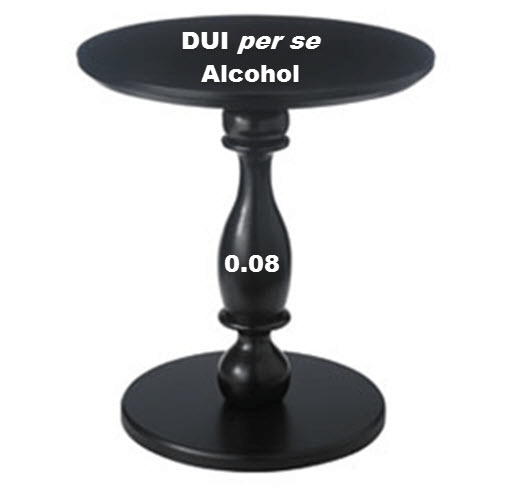
DUI per se in Georgia can be for alcohol or for marijuana. Alcohol is the dominant type, by 20 to 1. This section covers alcohol per se under Georgia's driving under the influence statute, subsection (a)(5), for exceeding the legal alcohol limit. The entire per se alcohol case depends on the state's BAC tests and getting results admitted at trial. Your attorney's job is to raise numerous defenses to keep those numeric results out of evidence.
Imagine you were lawfully arrested for driving impaired. Even at a checkpoint, even if you did not take a single field sobriety test, even if you did not admit to drinking, even if you gave the officer only your name and address – this DUI can still result in conviction. The conviction happens only if the "number" is allowed as evidence at trial. Your criminal defense attorney must prevent admission of your post-arrest test results through pretrial motions.
The overwhelming majority of arrests in Georgia are for alcohol. That means a breathalyzer will be requested from the detained driver as the state-administered test after arrest. The exclusive breathalyzer currently used in Georgia is the Intoxilyzer 9000. Georgia implied consent law means you either know your legal rights and follow them, or you face a suspended driver's license for one full year. A DUI refusal is commonly called a violation of implied consent. This license suspension occurs merely from not taking the arresting officer's requested alcohol blood test – whether by breathalyzer, blood, or urine. Our DUI attorneys can tell most drivers that they can retain some type of limited driving privileges. This testing is usually requested only after your arrest, which confuses many Georgia arrestees. They expect this test before being arrested. Georgia's implied consent law also reaches a driver involved in a crash causing serious injuries or death, even without an arrest. They think that roadside agility testing and the HGN eye test may allow them to go home.

If you were arrested for DUI in Atlanta, time is not on your side. The 30-day deadline to challenge your administrative license suspension under Georgia law starts running the moment you receive notice. Waiting too long may cost you your driving privileges for a full year.
William C. Head, Larry Kohn, and Cory Yager handle DUI defense cases across metro Atlanta courts – including Fulton, DeKalb, Gwinnett, and Cobb counties. When you call William C. Head, PC, the first consultation is free. That initial call covers the facts of your arrest, your pending court date, and your license status. You will understand what to do when you get a DUI charge in Georgia.
Every DUI case is different. The outcome depends on the specific facts – the reason for the stop, the field sobriety test results, and whether chemical testing was properly administered. A Georgia DUI attorney may be able to get your case dismissed, negotiate a reduction to reckless driving, or win at trial, depending on the circumstances. Before you choose counsel, you can read attorney reviews of DUI lawyers in Atlanta.
Do not plead guilty before exploring your options. Call William C. Head, PC anytime day or night at 404-567-5515 for a free consultation. You can also learn more about DUI accident defense, whether a DUI is a criminal offense, and the difference between misdemeanor and felony DUI in Georgia, including the types of felony DUI the state can charge.
Past results do not guarantee a similar outcome. Every case is different and results depend on the specific facts.

Georgia charges this offense as DUI, not DWI. Start by writing down every detail you remember about the traffic stop, field sobriety tests, and any statements you made. Preserve all paperwork – the citation, bond documents, and the DS-1205 implied consent form. Do not discuss the arrest on social media or with anyone except an attorney. Contact a Georgia DUI lawyer as soon as possible to start protecting your rights.
You have 30 days from the date you receive notice of the suspension to act. Under Georgia's administrative license suspension law, you must either file a written request for an administrative hearing with the Georgia Department of Driver Services along with a $150.00 filing fee, or, if you are eligible, apply for an ignition interlock device limited driving permit. Missing this deadline waives your right to a hearing.
Georgia does not use the term "DWI." The state charges impaired driving offenses as DUI – driving under the influence – under Georgia law. Many people search for "DWI" out of habit because other states use that label. Regardless of what you call it, the charge, penalties, and defense strategies are the same under Georgia law.
You are not required to discuss the facts of your arrest with law enforcement after the stop is over. Anything you say may be used against you. Provide your name and basic identification, but do not volunteer details about where you were, how much you drank, or what happened. Speak with a Georgia DUI defense attorney before making any statements.
A failed breath test does not automatically mean a conviction. Under Georgia's chemical test requirements, results must meet strict standards to be admitted at trial. The machine must have been properly maintained. The operator must hold a valid permit from the Georgia Bureau of Investigation. Two sequential breath samples must not differ by more than 0.020 grams. A defense attorney may be able to challenge the test results through pretrial motions, depending on the facts of your case.