William C. Head, P.C.
Atlanta DUI Law Firm




The public intoxication lawyer cost in Georgia usually runs from $750 to $2,500 for a simple misdemeanor defense. Harder cases – those with added charges or a prior record – can push fees higher. These figures are examples, not quotes. Your true cost depends on things like the court, the prosecutor, and the facts of your case. Georgia treats public intoxication as a misdemeanor under public intoxication laws. The statute reaches a person who appears in an intoxicated condition in a public place when that condition is made manifest by boisterousness, by an indecent condition or act, or by vulgar, profane, loud, or unbecoming language. A conviction carries a fine of as much as $1,000, confinement of as long as 12 months, or both. Those maximum penalties set the ceiling that defense pricing works around. A case headed toward a simple plea deal costs less than one that needs contested motions or trial prep. Fees also depend on whether you plan to fight the charge or work out a deal. A first-timer seeking pretrial diversion needs different legal work than someone with prior convictions fighting the arrest. Knowing these factors helps you budget before your first court date.
Most Georgia defense lawyers charge flat fees for these cases. The scope of a stand-alone misdemeanor is easy enough to predict that lawyers can size up the workload upfront. You know your cost from day one. A flat fee usually covers the arraignment. It also covers pretrial talks with the prosecutor. Most flat fees include one or two court dates. You pay one amount and know what your defense costs before work begins. Hourly rates – often $200 to $450 per hour in the Atlanta area – may apply if the case grows. If the state adds charges like disorderly conduct or DUI, the legal work expands. If the case moves to a contested hearing or jury trial, more work is needed. Trial prep, witness interviews, and motions all add billable hours. Extra bills beyond the flat fee usually come from contested motions, trial prep, or an appeal. Ask your lawyer upfront what triggers extra costs. A clear written fee deal protects both sides.
No two cases cost the same to defend. Several things decide where your case lands in the fee range.
A stand-alone charge is the cheapest case. The legal work is limited: review the police report, talk with the prosecutor, and show up in court. Fees climb when more charges come with the arrest. Prosecutors often add disorderly conduct, resisting arrest, open container tickets, or even DUI charges. Each added charge means more analysis, more discovery review, and more bargaining. A case with three charges takes far more lawyer time than a one-count case. A companion charge like disorderly conduct raises the total fee, because every count carries its own discovery, its own negotiation, and its own plea terms. One charge costs less to fight than several.
First-timers usually pay less. Their cases are easier to land well because prosecutors often offer pretrial diversion or a drop to a lesser offense. Those talks take less time and end better. Repeat offenders face steeper fees. A prior record makes prosecutors dig in. Defense lawyers need more time to build the case. The goal is to break through the state's pushback on good plea offers. If your record includes past alcohol offenses, expect your costs to reflect the extra work.
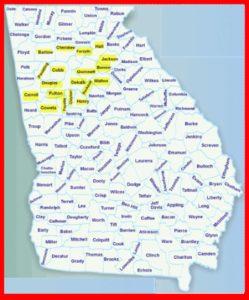
Where your case is filed affects your costs. Atlanta Municipal Court handles many of these arrests inside city limits. Fulton County State Court, DeKalb, Cobb, and Gwinnett each run things their own way. Each court has its own prosecutors and its own diversion programs. An Atlanta DUI lawyer with deep roots in a given court may charge more. That know-how often ends cases faster. A lawyer who knows how a given prosecutor treats first offenses can save weeks of delays and wasted hearings. Knowing which courts offer pretrial diversion helps too.
A seasoned Atlanta criminal defense lawyer usually charges more than a newer one. The premium buys real value. These lawyers know the local prosecutors well. They know how judges lean. They know which diversion programs may fit your case. That experience often lowers your total cost when you look past the fee itself. A veteran who wins a dismissal wipes out the long-term costs of a conviction. A cheaper, greener lawyer may cost more in the end if the outcome is worse.
A standard flat fee in Georgia covers several services. The first consultation is included. Your lawyer will dig into the case. You get a review of the police report and any body camera footage. Your lawyer will bargain with the prosecutor. All scheduled court dates are covered. You stay in the loop the whole way. Your lawyer should keep you posted at every stage, from the first look at the evidence to the final result. Some services fall outside the standard fee. Expert witnesses cost extra. Appeals after a conviction take a separate deal. Related civil matters usually cost more too. Unusual cases can add charges – say, a constitutional challenge to the arrest or a motion to throw out badly gathered evidence. Always ask for a written fee deal before hiring any lawyer. It should spell out what services are included. It should explain what triggers extra fees and how billing works. That guards you from surprises and lets you compare firms.
This is the question most people really want answered. The charge may seem minor, but its fallout reaches far beyond the courtroom. A conviction under public intoxication laws puts a misdemeanor on your criminal history, and Georgia law does not let you even ask a court to restrict access to that record until the sentence is complete and four years have passed with no new conviction. That record shows up on background checks for jobs, housing, and license reviews. Many employers screen out applicants with misdemeanor convictions. Landlords use records to turn down renters. Licensing boards may delay or deny a license over a public intoxication conviction. Those boards cover nurses, teachers, real estate agents, and many other fields. Weigh a one-time fee of $750 to $2,500 against years of lost job and housing chances. The math favors hiring a lawyer in most cases. Many of these cases end through pretrial diversion, first offender treatment, or a drop to a lesser offense. Those paths can leave no conviction on your record. First-timers in Atlanta-area courts often qualify for diversion. Finish a few simple steps, and the case is dismissed. Community service or an alcohol class may be all it takes. These wins are much harder to get on your own. Prosecutors bargain differently with seasoned defense lawyers than with people who have no lawyer. A lawyer who knows the local court's diversion rules can present your record and your facts early and in detail. That edge starts with the first talk with the prosecutor. Every case is different. Your facts matter. Your record matters. Your work and life goals matter. But for most people facing this charge, hiring a lawyer pays for itself many times over.
Many people search for "public drunkenness GA" without realizing it is the same offense as public intoxication. Georgia's statute never uses the words "public intoxication." It describes a person who appears in an intoxicated condition in a public place, and it refers to local laws that punish drunkenness. Both phrases point to the same misdemeanor. If you want the offense itself explained step by step, read our guide to public drunkenness charges in Georgia. This page stays on what the defense costs.
The statute has three elements the state must prove. First, the person was in an intoxicated condition. Second, they were in a public place, or within the curtilage of a private residence that was not their own, without an invitation from the owner or lawful occupant. Third, the intoxication was made manifest by boisterousness, by indecent condition or act, or by vulgar, profane, loud, or unbecoming language.
That third element – manifestation – is where many cases rise or fall. When body-cam footage shows loud or disorderly behavior, the state has strong proof. Those cases typically require more negotiation time, which raises defense fees. When the evidence on manifestation is thin – for example, a person was simply sitting quietly on a bench – the case often resolves faster and at a lower cost.
Because public drunkenness is a statewide misdemeanor, the cost ranges discussed earlier in this article apply whether your citation uses the words "public drunkenness" or "public intoxication." The court where the case is filed – Atlanta Municipal Court, Fulton County State Court, DeKalb, Cobb, Gwinnett, or a smaller municipal court – affects available diversion programs and how prosecutors handle these charges, which in turn shapes the total fee.
Two different charges can follow the same arrest. The difference shows up in your fee. The state statute says plainly that it does not affect the power of counties and cities to pass their own laws punishing drunkenness. So an officer inside city limits may write a city ordinance citation. A deputy outside city limits writes the state charge instead. You do not get to pick. The wording on the ticket decides it.
That choice also sets the court. A city's municipal court jurisdiction covers ordinance violations, and a municipal court may impose punishment up to the maximums general law allows. For an ordinance, general law stops at six months of confinement and at $1,000 in fines and bond forfeitures. A state charge carries the full misdemeanor range instead, which runs to 12 months.
Municipal court has one more rule that touches your wallet. It may not impose confinement, probation, or any other loss of liberty unless it gives the accused the right to be represented by a lawyer. The same rule covers a fine or fee that confinement can enforce. Anyone who is indigent must be given counsel at no cost.
Here is the practical picture. Ordinance cases in municipal court often finish in one or two settings, which fits a lower flat fee. A state charge runs on an accusation, with a solicitor, written discovery, and the option to demand a jury. More steps mean more hours, and the flat fee reflects those hours.
Diversion is the result most first-timers want. It also carries its own price tag. Georgia law lets prosecuting attorneys create and run a pretrial diversion program. That authority reaches solicitors in state court. It reaches prosecutors in municipal, magistrate, and probate court too. The stated purpose is to provide an alternative to prosecuting offenders in the criminal justice system.
Entry is not a right. It sits in the prosecuting attorney's discretion, under written guidelines. The statute says those guidelines must weigh the nature of the crime, the prior arrest record of the offender, and the notification and response of the victim. Presenting your record and your facts against those three yardsticks, before the file hardens, is exactly what you pay a lawyer for.
Budget two separate numbers. The first is the legal fee. The second is the program fee. The statute lets the prosecuting attorney assess up to $1,000 for administering the program. On a showing of good cause, that fee may be waived in whole or in part. It may also be made payable in monthly increments. Both are asks a lawyer makes for you. Add any class, assessment, or community service cost the program sets. Then compare the total against what a contested case would run.
If diversion is off the table, two other routes still change the long-run cost of the charge.
First offender sentencing is open to a defendant who has not been convicted of a felony before. On a guilty or nolo plea, and with your consent, the court may defer further proceedings without entering a judgment of guilt. It can then place you on probation. Finish the terms and you are exonerated of guilt and discharged as a matter of law. Violate probation, or pick up another conviction during the sentence, and the court may enter the adjudication of guilt and sentence you as the law otherwise provides. The court also has to review your record with the Georgia Crime Information Center first.
Even a conviction already entered is not the last word. Georgia allows a later petition for record restriction on a misdemeanor. You file it in the court where the conviction happened. You must have completed the sentence, gone at least four years with no new conviction, and have no pending charges. The court grants it only if the harm to you clearly outweighs the public interest in the record staying open. That is separate legal work with its own fee. It is one more reason to spend money on the front end.
One sentencing detail is worth knowing. When a misdemeanor sentence is six months or less, the judge may let it be served on weekends or during your nonworking hours. A weekend term counts as two days of the sentence. Misdemeanor punishment may also be suspended or probated at the judge's discretion.
Travel and time away from work are real costs. Georgia's arraignment statute says the accusation is read to the accused, and the answer or plea is made orally by the accused person or by counsel. That is why a misdemeanor can sometimes be answered at a calendar call by your lawyer. Whether a judge excuses your appearance is that court's call, not a right. Ask before you book anything. When it works, it saves a day of lost wages, parking, and a trip across town for each setting. That is why the number of required settings matters as much as the hourly rate.
Most Atlanta defense firms set up payments to make hiring a lawyer doable. You can pay a flat fee upfront. Payment plans spread the cost over weeks or months. Many firms take credit cards. Many law offices also offer free first consultations. You can get a fee estimate for your case before you commit a dime. Use that meeting to learn what your case will cost and how you can pay. Retainers mean putting funds in a trust account the lawyer draws from as work gets done. They are rare for simple cases like this. They may apply to bigger matters. The fee ranges in this article are general information. They are not a quote for your case. Pricing shifts with the lawyer, the court, and how hard the case is. The only way to get a real number is to talk with a lawyer about your own case.
If you face a public intoxication charge in Georgia, a free consultation should be your first step. It gets you a fee estimate built for your case. Bringing a lawyer in early often ends better. A lawyer can review the evidence with care. They can spot holes in the state's case. They can reach the prosecutor early. That keeps diversion and dismissal on the table. Waiting too long can shrink your options and raise your total costs. William C. Head, PC has spent decades defending misdemeanor and alcohol charges. The firm covers Atlanta and metro Georgia courts. It knows the local prosecutors, court steps, and diversion programs well – in Fulton, DeKalb, Cobb, Gwinnett, and Atlanta Municipal Court. That experience gives clients a real edge. No lawyer can promise an outcome. But a seasoned defense gives you a real chance at protecting your record and your future. Call William C. Head, PC today for a free consultation about your public intoxication case. You will get a clear picture of what your defense will cost.

Public intoxication GA is a statewide misdemeanor under Georgia law, and the same statutory elements apply in every Georgia county. The statute also says it does not affect the power of counties and cities to pass their own laws punishing drunkenness, so an arrest inside city limits may be charged under a local ordinance instead. Where the case is filed matters, though. Atlanta Municipal Court, Fulton County State Court, DeKalb, Cobb, Gwinnett, and smaller municipal courts each have different prosecutors and diversion programs. Those differences affect how the case is handled and how defense fees are set. A lawyer familiar with the specific court where your case is filed can give you the most accurate cost estimate.
Public intoxication defense fees in Atlanta usually run $750 to $2,500 for a simple case. Fees shift with the court, the lawyer's experience, any added charges, and whether the case goes to trial. Most Atlanta defense lawyers offer free consultations where you can get an estimate for your case.
Yes, in some cases. First-timers may qualify for pretrial diversion, which ends in dismissal once you finish the program. A lawyer may also bargain the charge down or find errors that support a motion to dismiss. Outcomes turn on the facts of each case.
The law does not make you hire a lawyer. A municipal court cannot impose confinement, probation, or a fine that confinement can enforce unless it gives you the right to be represented by a lawyer, and it must provide counsel at no cost if you are indigent. Hiring your own lawyer still improves your odds of keeping a conviction off your record. First-timers often qualify for diversion or dismissal. Those wins come much easier with a seasoned lawyer. The long-term cost of a conviction usually outweighs the one-time cost of a lawyer.
Under Georgia law, public drunkenness and public intoxication refer to the same offense. Both are classified as a misdemeanor. The maximum misdemeanor penalties include a fine of up to $1,000 or confinement for up to 12 months, or both, and the sentencing judge may suspend or probate that punishment. First-timers in Atlanta Municipal Court and Fulton, DeKalb, Cobb, and Gwinnett State Courts rarely face the maximum. Typical first-offense outcomes land well under the maximum: a fine with court costs, community service, probation, or pretrial diversion that ends in dismissal. A conviction – even for a first offense – puts a misdemeanor on your record, and you cannot petition to restrict access to it until the sentence is complete and four years have passed with no new conviction. See our related guide: Public Drunkenness in Georgia: What the Law Says and What to Do If You're Charged.
Many Atlanta defense firms offer payment plans for misdemeanor cases, including this one. Common options include installment plans, credit cards, and flat fees. Ask about payment options during your free consultation so you can plan before you commit.