William C. Head, P.C.
Atlanta DUI Law Firm




A violation of probation warrant is a bench warrant, sometimes called a capias, that a Georgia judge issues when a probationer is accused of breaking the terms of a probated sentence. The warrant authorizes law enforcement to arrest the probationer and hold them for a revocation hearing. Under Georgia law, officers may arrest a probationer accused of violating probation conditions. In some circumstances, a probation officer can make that arrest without any warrant.
A probation warrant is not the same as an arrest warrant for a new crime. No new offense is required. The State only needs to allege that you broke a condition of your sentence. One missed office visit or one failed drug screen can be enough. Some Georgia courts style the document as a capias warrant. The label changes, but the effect does not. Any officer who runs your name can take you into custody on sight.
William C. Head, PC has defended Georgia criminal and DUI cases for decades. We appear regularly in metro Atlanta superior, state, and municipal courts. That local familiarity matters, because the judge who issued the warrant usually decides what happens next.

Probation officers request warrants for many different reasons. These are the most common triggers in Georgia courts.
Missed appointments or failure to report. Skipping a scheduled office visit is the fastest way to draw a warrant. Officers may excuse one missed visit, but repeated no-shows usually lead to a violation report.
Failed or missed drug and alcohol tests. A positive screen violates most probation orders. So does skipping the test, which many officers treat the same as a failure.
Unpaid fines, fees, or restitution. Falling behind on court-ordered payments can trigger a warrant. Judges must consider your ability to pay before revoking probation on that basis alone.
Incomplete community service or classes. Failing to finish community service, DUI school, or court-ordered treatment by the deadline is a common violation, especially near the end of a sentence.
A new arrest or charge. Picking up any new charge while on probation almost always produces a warrant, even before the new case is resolved.
Leaving the county or state without permission. Travel restrictions are standard conditions. An unapproved move or trip can be reported as absconding.
Georgia law treats these categories differently. Most of the items above are technical violations, meaning broken supervision rules. A new crime is a substantive violation. That distinction controls how much time a judge can revoke, as explained below.
If you get a warrant while on probation in Georgia, you can be arrested at any moment. You may then sit in jail without bond until your revocation hearing. Clients often ask us what happens if you get a warrant while on probation. The honest answer: the process moves fast once the warrant is out.
The warrant is entered into GCIC and NCIC, the state and national crime databases. From that point, any police contact can end in arrest – at home, at work, or during a routine traffic stop. Many Georgia probation violation warrants are issued with no bond amount. Depending on the county and judge, that can mean weeks in jail before a hearing.
The clock may also stop running on your sentence. Under Georgia law, probation can be tolled once a probationer absconds. The time you spend avoiding the warrant does not count toward finishing your sentence.
The revocation hearing itself is subject to Georgia statutory procedure. There is no jury. The State only has to prove the violation by a preponderance of the evidence, meaning more likely than not. That is a far lower bar than the beyond-a-reasonable-doubt standard used at a criminal trial. It is one reason these hearings are so dangerous to face alone.
The stakes depend heavily on whether the underlying sentence was a felony or a misdemeanor.
A misdemeanor probation violation warrant usually comes out of a state, municipal, or probate court. If the judge finds a violation, the court may revoke up to the remaining balance of the sentence. That time is served in county jail. On a twelve-month sentence with eight months left, the exposure can be up to eight months in custody.
A felony probation violation warrant issues from the superior court that imposed the sentence. Here, exposure turns on the type of violation. Under Georgia law, revocation for a technical violation of felony probation is capped at two years in confinement or the remaining balance of the sentence, whichever is less. But if the alleged violation is a new felony offense or a special condition of probation, the judge may revoke up to the entire remaining balance — though for a new felony, the revocation cannot exceed the maximum sentence for that new offense. That can mean years in prison.
Felony warrants are also more likely to be issued with no bond. Judges may view a felony probationer as a higher flight risk. Acting before arrest matters even more in felony cases.

Many people ask how long does a probation violation warrant last, hoping the problem will fade with time. It will not. Probation violation warrants in Georgia do not expire. The warrant stays active until it is served, lifted, or withdrawn, even if that takes years.
Waiting makes the problem worse. While the warrant is outstanding, your probation is typically tolled, so the sentence does not run down. The warrant appears on background checks, where it can block jobs, housing, and professional licenses. And because it sits in national databases, a traffic stop in another state can still land you in jail and start extradition back to Georgia.
There is no version of this where the warrant quietly goes away. Waiting it out is not a strategy. The only reliable fix is to deal with the warrant directly, and the next section explains how.
If you are researching how to clear a probation violation warrant, you have two realistic paths. The first is a coordinated voluntary surrender. The second is a motion asking the court to lift the warrant. Which path fits depends on the county, the judge, the alleged violation, and your history on supervision.
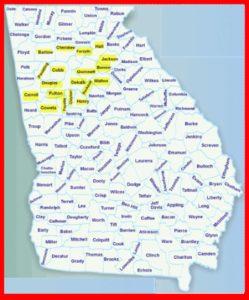
Two approaches do not work. Hiding from the warrant only tolls your probation and guarantees a worse arrest later. Walking into the jail with no plan often means sitting for weeks with no bond while you wait for a hearing date. In our experience arranging voluntary surrenders in Fulton, Gwinnett, and Cobb County courts, clients who appear with counsel and a compliance plan are far more likely to receive a bond. People picked up on the street rarely get that benefit.
Timing drives everything. An attorney has the most leverage before you are arrested, while there is still room to negotiate how and when you come in.
A coordinated surrender, sometimes called a walk-through, is often the cleanest way to resolve a probation warrant. Your lawyer contacts the probation officer and the court in advance, confirms the warrant details, and arranges a date for you to appear. Counsel can then push to place the case on the judge's calendar quickly. You are not lost in the jail system waiting for a hearing.
Most importantly, your attorney can argue for a bond or release on your own recognizance at the first appearance. Judges may respond well to a probationer who shows up voluntarily with a lawyer and a plan to fix the violation. A planned surrender reads far better at the revocation hearing than an arrest during a 2 a.m. traffic stop.
The second path is a motion asking the judge to withdraw the warrant before any arrest happens. This works best when the violation is curable. Your attorney pairs the motion with evidence: certificates from completed classes, receipts showing caught-up payments, negative drug screens, or a firm reporting plan going forward.
Counsel can also negotiate directly with the probation officer and the prosecutor. Some violations can be resolved administratively or by consent order. In some counties, the client is never booked at all. Outcomes vary, though. They depend on the judge, the county, and your record on supervision, so no lawyer can promise the warrant will be lifted. A documented cure simply gives the court a strong reason to say yes.
A probation warrant will not resolve itself. Every week it sits active, your probation clock is likely tolled and the risk of a surprise arrest grows. Moving first, before the police find you, is the biggest advantage you can give your defense.
William C. Head, PC offers a free, confidential consultation to review the alleged violation and build a plan. We start by checking the warrant status, contacting the probation officer, and pushing for a fast hearing date and a reasonable bond. Whether the right move is a coordinated surrender or a motion to withdraw the warrant, you will know your options before you act. Call today – the sooner we start, the more leverage you have.

Sometimes. Many probation warrants are issued with no bond, but a judge can set one after your lawyer requests it. Appearing voluntarily with counsel and a compliance plan may improve your chances, depending on the county and the violation alleged.
A capias is the formal name some Georgia courts use for a bench warrant ordering your arrest. In the probation context, it directs officers to take the probationer into custody and bring them before the court for a revocation hearing.
Yes, in most cases. Active warrants go into GCIC and often appear on criminal background checks run by employers and landlords. The warrant can block job offers, housing applications, and professional licenses until it is cleared.
It may be possible. A judge can withdraw a warrant after your attorney files a motion. Courts are most receptive when the violation has been cured through completed classes, caught-up payments, or clean drug screens. The decision rests with the judge, so act promptly. If the warrant stands, the case moves to a probation revocation hearing, where the judge decides what happens to the rest of the sentence.
Bond on a probation warrant works differently: see our bail bond lawyers page.