William C. Head, P.C.
Atlanta DUI Law Firm




By William C. “Bubba” Head, Board-Certified DUI Defense Attorney and nationally recognized author on Georgia DUI law.
Getting arrested for DUI in Georgia, especially if it’s your first offense, usually comes with shock, confusion, and immediate questions about your license, your record, and what happens next.
Many people call our Atlanta office, unsure if they’ve just ruined their record, or if there’s still something that can be done.
The reality is that not every DUI leads to a conviction.
This article explains what happens after a first DUI arrest in Georgia, what sentencing typically looks like, how dismissal works, and what your best-case outcome might be.
If you’ve already been charged, speaking with an experienced Atlanta DUI lawyer can help you understand what’s at stake and what defenses might apply to your case. While dismissals are uncommon, the odds of getting DUI dropped often depend on whether key evidence can be challenged early in the case.

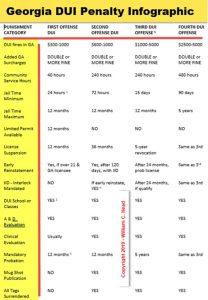
A first-time DUI conviction in Georgia results in mandatory penalties, even if you’ve never been in trouble. The standard sentence includes twelve months of probation, a fine between $300 and $1,000 (plus court surcharges), completion of DUI School, a substance abuse evaluation, and at least forty hours of community service.
Many drivers ask how likely is jail time for a first DUI in Georgia. If your blood alcohol concentration was 0.08 percent or higher, the court must also impose at least 24 hours in custody. That’s often credited as time served following arrest, but it’s not guaranteed.
For drivers under 21, the rules are stricter. A BAC of 0.02 percent, even from just one drink, can result in a conviction. License suspension in those cases is automatic and comes with no eligibility for a limited permit.
Georgia does not allow DUI convictions to be expunged or restricted. Once it’s on your record, it stays.
While full dismissals are rare, they do happen, especially when the arresting officer or prosecution fails to meet Georgia’s strict legal and procedural standards.

A DUI arrest in Georgia triggers two separate legal processes: a criminal case and an administrative license suspension (ALS). The administrative process begins immediately following your arrest, even before your first court date.
If you refused or failed a post-arrest chemical test, the officer likely gave you DDS Form 1205. This pink form acts as both a 30-day temporary driving permit and formal notice that your license will be suspended. It also starts the 30-day window to appeal the suspension through an ALS hearing or apply for a limited permit with an ignition interlock device, if eligible.

You have just thirty calendar days to respond. During that time, you must either request an Administrative License Suspension (ALS) hearing or, if eligible, apply for a limited permit that requires installing an ignition interlock device in your vehicle. An ignition interlock is a breath-testing device that prevents your vehicle from starting if alcohol is detected. With the permit, you can legally drive for essential purposes such as work, school, court dates, and medical appointments, for up to 12 months.
There is no early removal of the IID, even if your DUI case is later dismissed.
The criminal case starts separately, with your arraignment. This is your first court appearance, where you’ll enter a plea. In Georgia, there are three options: guilty, not guilty, and nolo contendere, or “no contest.”
A guilty plea accepts responsibility. A not-guilty plea challenges the charge and moves the case forward. A no-contest plea means you don’t admit guilt but don’t dispute the charge.
Nolo pleas are extremely limited in DUI cases. They can only be used once every five years and require court approval, and even then, the Georgia Department of Driver Services will still treat them as convictions for license purposes. In most DUI cases, a nolo plea does not protect you from suspension or avoid a criminal record.
If you plead not guilty, the case moves into the pre-trial phase. This is where the defense can begin reviewing evidence, filing motions to suppress evidence (for example, if the Implied Consent Warning was read incorrectly), and negotiating with the prosecutor.
Most DUI cases in Georgia are resolved during this stage. In fact, fewer than two percent actually go to trial. That does not mean you should plead early. It means that what happens in the pre-trial phase often determines the outcome.
The best possible outcome in a first-time DUI case is a full dismissal, but that is rare and only happens when the state’s evidence cannot be used in court. Dismissals usually result from legal or procedural errors, such as an illegal traffic stop, a defective Implied Consent Warning, or mishandled blood, breath, or urine evidence. These problems are often revealed through motions filed during the pre-trial phase rather than through negotiation.
For most people, the best realistic outcome is a reduction to reckless driving. This is still a misdemeanor, but it avoids the harsher consequences of a DUI conviction, including license suspension (for those over 21), a permanent DUI record, and increased insurance rates.
Prosecutors may consider a reduction when the BAC is borderline, the driver has no criminal history, and there are no aggravating factors such as an accident or minor in the vehicle. But even in first-time cases, reductions are not guaranteed. The defense needs to identify legal or procedural weaknesses early, ideally before formal plea discussions begin. That is when alternative outcomes are still on the table.

DUI dismissals in Georgia are uncommon, but they do happen. In 2024, the Georgia Department of Driver Services reported more than 17,000 first-time DUI convictions were reported statewide, including over 900 in Fulton County and nearly 1,000 in Cobb. Although DDS does not publish data on case dismissals or reductions, the conviction volume alone illustrates how rarely DUI charges are dropped without a legal or procedural flaw.
Georgia’s conviction rate for DUI cases exceeds 90 percent. In practical terms, that means most DUI charges result in a conviction, either through a guilty plea or at trial.
Note: The Georgia Department of Driver Services does not track case dismissals or charge reductions. These estimates are based on conviction totals and trends observed in Georgia criminal courts.
However, not every arrest leads to a DUI conviction. About 28 percent of cases are reduced to lesser offenses such as reckless driving. Full dismissals typically happen when the prosecution’s case falls apart because the evidence cannot be admitted in court.
That might include a traffic stop without legal justification, an Implied Consent Warning that was delivered too late or misread in violation of O.C.G.A. § 40-5-67.1., or a chemical test that cannot be verified. In breath test cases, the Intoxilyzer 9000 must be properly maintained and certified. If its calibration or usage logs are incomplete, the results may be excluded. For blood tests, the state must prove who handled the sample, where it was stored, and how it was tested. If the chain of custody is unclear or incomplete, the test results may not be allowed at trial.
But those flaws only matter if they’re identified before formal charges are resolved.

If you’ve been charged with DUI, even for the first time, what happens in the first 30 days can shape the entire outcome. That includes license suspension deadlines, preservation of evidence, and whether key procedural errors can be used to your advantage.
Atlanta DUI lawyer William “Bubba” Head is one of Georgia’s most recognized criminal defense lawyers. He is Board-Certified in DUI Defense Law, a best-selling author on Georgia DUI defense, and has successfully handled thousands of cases statewide.
Schedule a consultation and bring everything: your DDS Form 1205, citations, test results, and release paperwork. These documents often hold the first and best opportunity to shift the case before it ever reaches trial. Call our office at 404-567-5515 or fill out our no-obligation, confidential online case evaluation form.