William C. Head, P.C.
Atlanta DUI Law Firm



By: William C. Head, Atlanta Criminal Defense Lawyer, and a Board-Certified DUI Defense Attorney
Many people believe that police must read Miranda Rights during every arrest, including DUIs. However, that’s not how Georgia law works.
Unlike other felony or misdemeanor crimes in America, where a person is typically read their Miranda rights after being taken into custody, DUI suspects in Georgia are not automatically given Miranda warnings upon arrest. That’s because Miranda only applies to custodial interrogation, not routine DUI evidence collection like breath, blood, or urine tests.
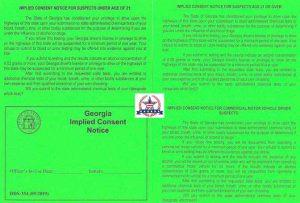
Instead, after a DUI arrest in Georgia, the officer reads a card called the Implied Consent Notice, which explains that you must submit to a blood, breath, or urine test (BAC test). Refusing this test can result in a 12-month license suspension. However, that Implied Consent Notice is NOT the Miranda Rights–a distinction that confuses many drivers.
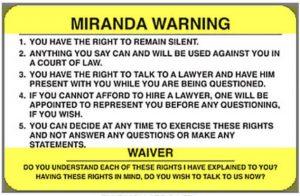
Miranda Rights, established in Miranda v. Arizona (1966), protect suspects during custodial interrogations. They include:
This article explains what Georgia’s Implied Consent Law is, how it differs from Miranda Rights, and when police may or may not read Miranda warnings during DUI arrests. We also address common misconceptions about these laws which begin with that famous phrase: “You have the right to remain silent…”
In Georgia, the Implied Consent Law, under OCGA 40-5-67.1, states that, as a condition of driving on our State’s roads, you must submit to a BAC test if suspected of consuming alcohol or drugs. If you refuse this test, you face an automatic license suspension or the option to install an Ignition Interlock Device (IID) to regain limited driving privileges.
Police do not typically read Miranda Rights after a DUI arrest because their main priority is to collect a chemical sample—such as blood, breath, or urine—to measure a driver’s level of impairment.
For an arrest to be constitutionally valid, the police must read the full Miranda Rights. If this isn’t completely read, it violates your Fifth and Sixth Amendment rights.
Below, we answer the most common questions about Miranda Rights and DUI arrests that clients may have.
“Miranda Rights” originate from the landmark 1966 United States Supreme Court case Miranda v. Arizona. These rights ensure that people in police custody receive a full Miranda warning before police interrogation, advising them of their Fifth Amendment right against self-incrimination and their Sixth Amendment right to legal counsel before and during questioning. You can invoke these rights at any point during interrogation, not just before answering questions.
No, Miranda rights are not always required during a DUI arrest. Why? Because Miranda rights only apply when you’re in custody and interrogated post-arrest.
After an arrest for Georgia DUI, police will immediately read you the Georgia Implied Consent Notice, informing you of your legal obligation to submit to a BAC test or risk an automatic 12-month license suspension. A full wording of the Implied Consent Card that police will read is the green card shown above.
Not when arrested for drunk driving in Georgia. Since Georgia’s implied consent law says nothing about Miranda warnings, the arrestee in a first-offense DUI arrest is being denied the same protections that a police officer must give murder suspects and suspects of other serious crimes. However, other states (North Carolina, South Carolina, California, etc.) require Miranda Rights to be read before a suspect submits to chemical testing.
In Georgia, police are not required to read you the Miranda warning after a DUI. However, as detailed below, officers must Mirandize you in certain circumstances.
After a DUI arrest, police usually search your vehicle before it is towed. If officers find contraband (such as drugs or weapons) and want to question you about it, they must Mirandize you first. At this point, they are no longer just handling a DUI—they are now detaining and interrogating you about a separate crime.
However, simply finding contraband does not automatically require a Miranda warning—the key factor is whether the officer intends to question you about what they have found.
No, in Georgia, this is not possible. However, your DUI defense attorney may file a motion so the judge never hears this ‘evidence.’
While the FAQ addresses questions about Miranda Rights and DUI, we will now address Miranda in greater detail, how to invoke your right to refusal, and the risks and benefits of taking or refusing a BAC test.
Later, we also discuss the possible impact of a DUI for out-of-state drivers. Lastly, we will talk about DUI defenses.

In a traditional criminal case, Miranda warnings apply to custodial interrogation AFTER a person has been arrested. This stage of a criminal case is called a Tier 3 Terry situation, where, no doubt, the person is in police custody. At this stage, police advise you of your rights before questioning.
Once in police custody, anything you say can be used against you, making the right to remain silent one of the most important legal protections you have.
Almost every single arrest of any type will involve POST-ARREST custodial interrogation. If you don’t remain silent or SAY NO, the police officer (after giving the Miranda warning) will ask questions.
You can say nothing AT ALL because you are ALREADY arrested for a crime.
Many people mistakenly think that by not giving a definitive answer, they may get out of taking the test and avoid being held liable for refusal in a Georgia DUI case. However, a DUI refusal occurs (under implied consent) whenever anything other than an answer of “yes” is given.
Some repeat offenders have decided that they prefer risking the 12-month license suspension for refusal or choosing the Ignition Interlock Device option over giving the prosecution additional forensic evidence in the form of a chemical test.
While Miranda Rights protect against self-incrimination during police questioning, they do not apply to DUI evidence collection. This means that prosecutors can charge drivers based on BAC levels (DUI Per Se) or officer observations (DUI Less Safe), even without direct statements from the driver.
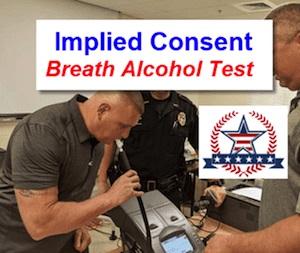
Even if you comply with a chemical test, the results can lead to a different type of DUI charge—one that doesn’t require proof of actual impairment.
The problem with a law enforcement officer collecting additional, incriminatory “evidence”—usually through breath tests for alcohol content—under implied consent laws is that the numbers generated by such forensic testing in a DUI alcohol case create a new type of crime: DUI Per Se, which applies when a driver is over the legal alcohol limit.
In fact, this type of DUI charge is easier to prove than the first type of DUI offense used to justify an arrest—DUI Less Safe (impaired driving)—as defined under Georgia DUI laws.

If you are licensed in another state but arrested for DUI in Georgia, your driving privileges in Georgia will be suspended for a minimum period of 12 months for refusing a breathalyzer test. Even though another state issues your license, Georgia will send a report sent by Georgia DDS to his or her state DMV or DPS, which could have repercussions in that jurisdiction.
The failure to properly deliver an implied consent sample can trigger an administrative driver’s license suspension for a full year.
This doesn’t happen in every case, but when it does, it can create major complications for out-of-state drivers. If you’re facing a DUI in Georgia but live elsewhere, your DUI lawyer can direct you on how to fight the suspension or revocation of your driver’s license in your home state.

One of the biggest questions DUI suspects face is whether to submit to the chemical test or refuse. By taking the test, you give the state more evidence against you, but you also gain the right to request an independent BAC test at your own expense, which can be a powerful tool in your defense.
Under Georgia law (O.C.G.A. 40-6-392), if you take the state-administered test, you have the right to request an independent test of your choice (breath, blood, or urine) at a medical facility. You must request the test, and the officer should make reasonable efforts to honor this request. If the officer fails to allow an independent test, the results of the state-administered test may be inadmissible in court.
Attorney Bubba Head’s general advice (to any person not involved in a serious bodily injury accident or a fatality accident) is to submit to the requested state-administered chemical test and then request an independent test.
Requesting an independent test is just one of the legal rights you have under Georgia DUI law. Thanks to the Georgia Supreme Court’s ruling in Elliott v. State (2019), prosecutors can no longer use breath test refusal against you. This is just one of many legal protections that could strengthen your defense.
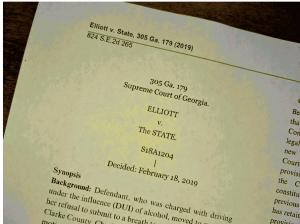
Recent court rulings have shaped DUI defense strategies in Georgia. These cases significantly changed how DUI cases are prosecuted and defended in Georgia. If you refused a breath test, your attorney may use Elliot v. State (2019) to argue that prosecutors can’t use your BAC breath test as evidence of guilt. If police forced you to take a breath test, Olevik v. State (2017) may allow your attorney to challenge that test as it may have violated your Georgia constitutional rights.
This means that under federal law, officers can request a breath test without reading Miranda Rights. Still, Georgia’s Constitution provides stronger self-incrimination protections, which can be part of a DUI defense strategy.
However, refusing a test can still result in a year-long driver’s license suspension under Georgia’s implied consent law, so understanding this is key.

A DUI conviction in Georgia carries serious consequences–consequences that demand an aggressive defense.
Georgia law has unique protections that could work in your favor, but time is not on your side.
You only have 30 days to challenge a license suspension or risk losing your driving privileges for up to one year.
Our DUI defense firm has over 90 years of combined experience defending Georgia drivers statewide accused of drunk driving, reckless driving, and other traffic offenses.
We also have insider knowledge of police procedures. Cory Yager, one of our law partners, is a former Roswell and Cobb County police officer who handled DUI arrests firsthand before becoming a drunk driving defense attorney. He knows precisely how cops will try and build DUI cases—and where they make mistakes.
Call 47-year veteran Atlanta DUI attorney William C. “Bubba” Head, former cop Cory Yager, or 20-year veteran criminal defense attorney Larry Kohn today for a free consultation at 404-567-5515. Prefer to start online? Use our free and confidential online consultation form to tell us everything that happened and everything you remember about your DUI arrest.
Our DUI attorneys are available 24 hours a day, on weekends, and on all holidays via phone, email, or through video conferencing.
When you or a family member is IN TROUBLE, we are ready to help.
Click any of the links below to learn more about Georgia’s implied consent law and how it may affect your DUI case: